


Why Does a Steam Family Game Lock When Two People Want to Play?
A Steam Family game can be visible yet locked. Learn how available copies, DLC, sharing eligibility, and cooldowns affect play.
Article languages
On this page
A game can appear in a Steam Family Library and still refuse to launch. Before leaving and rejoining a Family, check who is currently playing that game. Family changes have their own waiting period.
Steam Families lets up to 6 close household members access shareable games. Six members do not turn one game into 6 copies. I find it easier to understand the feature by counting the available copies of a particular game rather than counting Family members.
This article is based on the Steam Families User Guide & FAQ, checked on September 4, 2026. If the actual Steam Client shows different guidance for your account, follow that message.
Check the lock status first
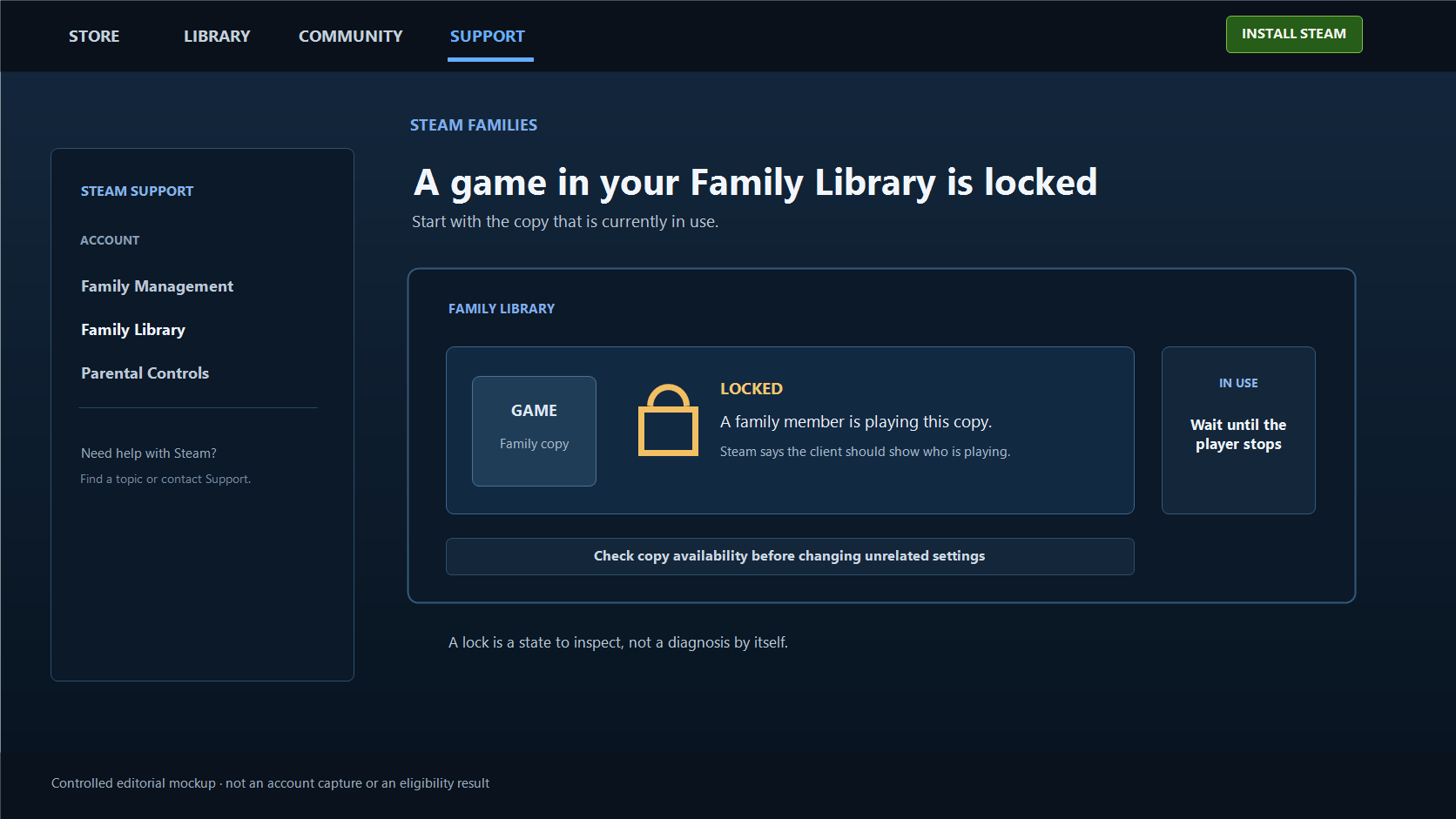
Steam Support says that when a Family-library game is locked, the Client should show who is playing it, and the lock remains until that person stops. Check the use status of this game first. Someone merely being online in Steam or playing another game does not explain the lock.
If no player is shown or another error appears, do not assume that the Family has run out of copies. Also check whether the game is shareable, whether its DLC fits, and whether region or operating-system conditions apply.
The same game needs the right number of copies
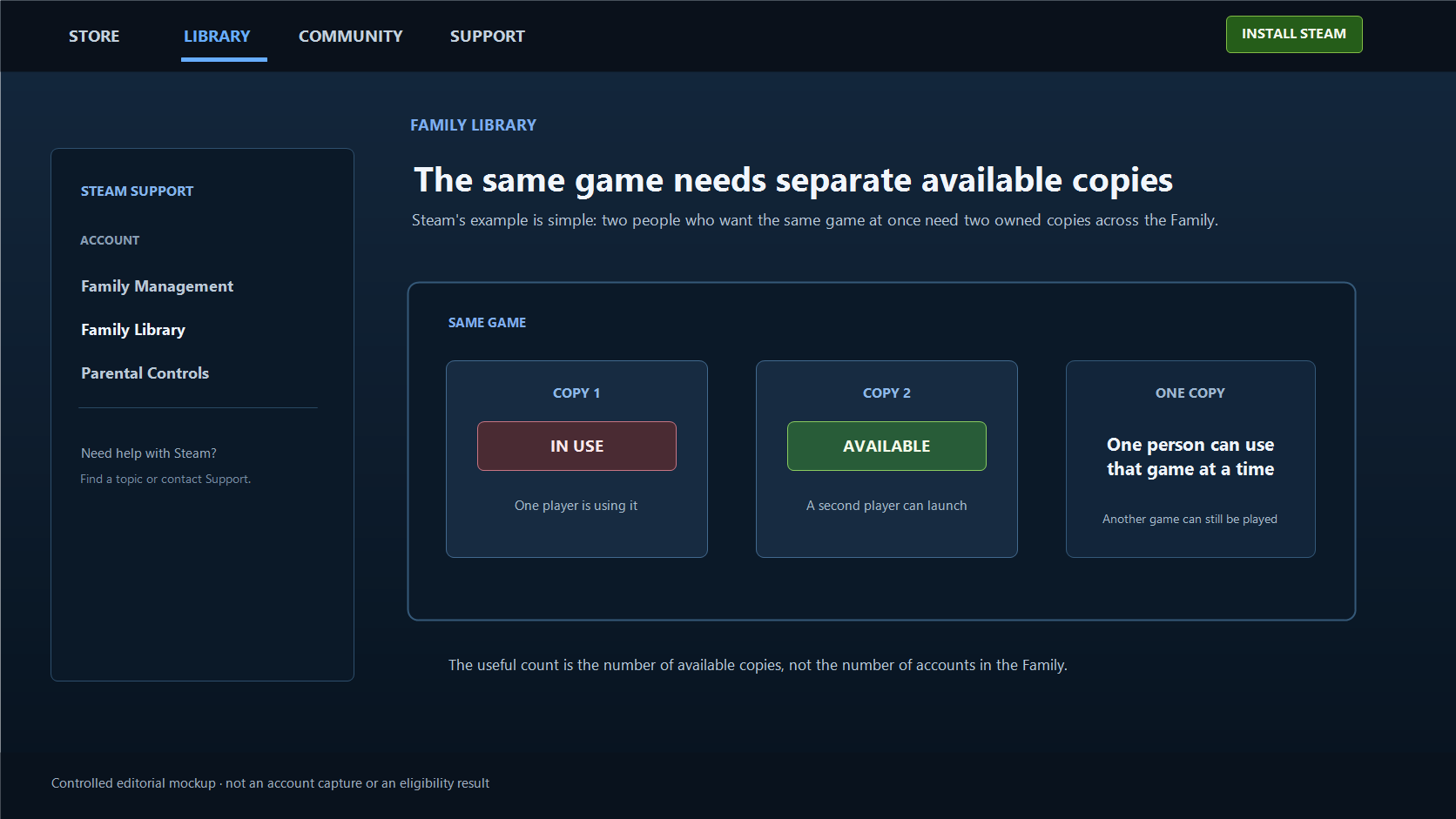
Valve's example uses Portal 2 and Half-Life. If a Family has one copy of each, one person can play Portal 2 while another plays Half-Life. If two people want Portal 2 at the same time, the Family needs another owned copy of Portal 2. Seeing the same title in two accounts' lists is not the same as having two usable copies.
There is no need to rush into another purchase. First check whether another member already owns the game and whether the two people need to play at the same time. If the available copies have different DLC, check the next condition before deciding.
Check DLC before switching copies
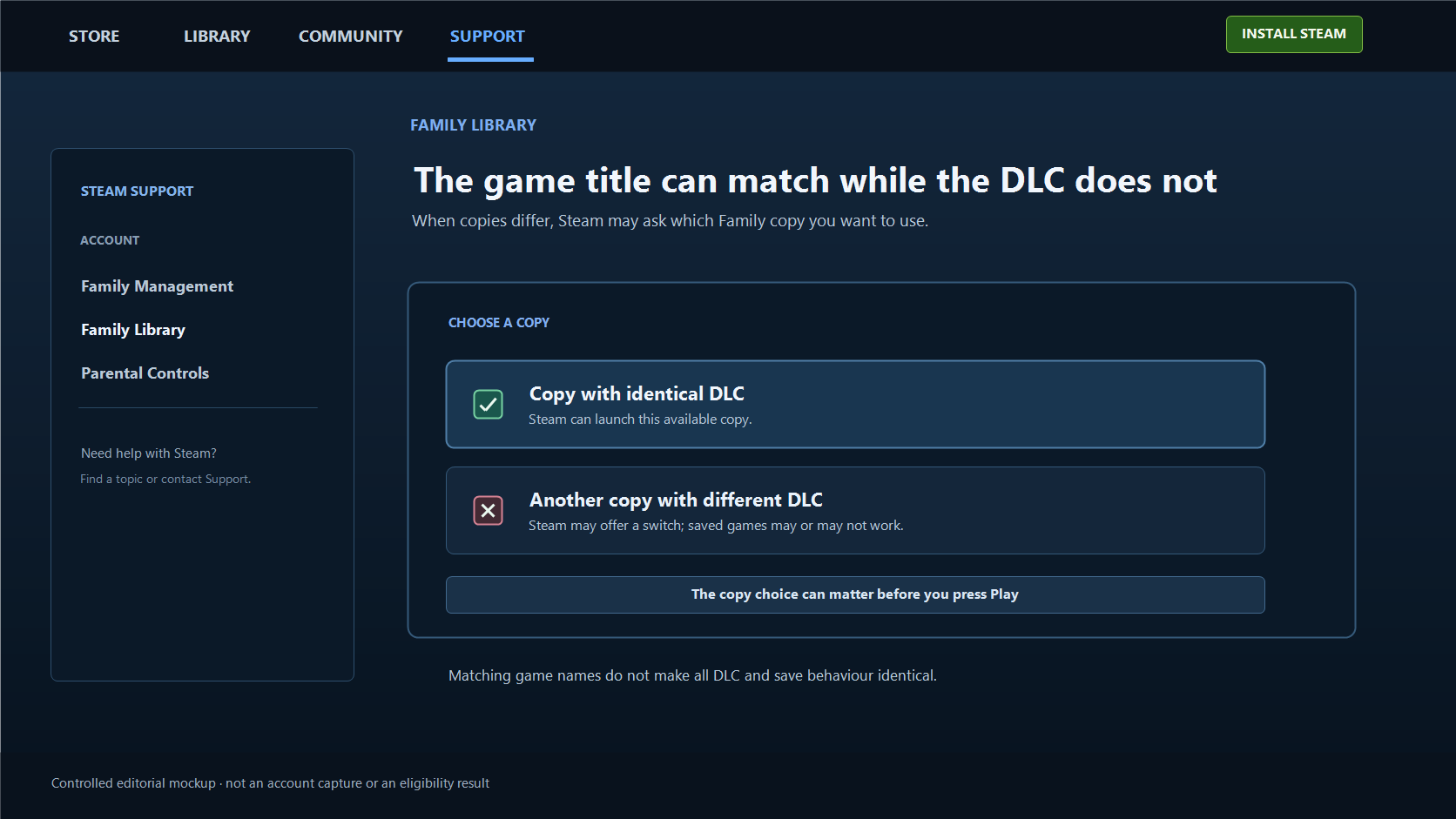
Steam says that an available copy with identical DLC can be used. If that copy is not available, Steam may ask whether to switch to a copy with different DLC. When several Family members own the game, Steam can let you choose a copy, change the choice later, and remember the earlier selection.
The FAQ warns that a save may or may not work after switching to a different-DLC copy. Save handling depends on the game. If progress matters, check which copy you have been using before accepting the switch.
Shared DLC has its own limit. You can access DLC that the owner has and that the publisher has marked as shareable. One Family member buying DLC does not mean that everyone can always use every piece of it.
Some games are not shareable
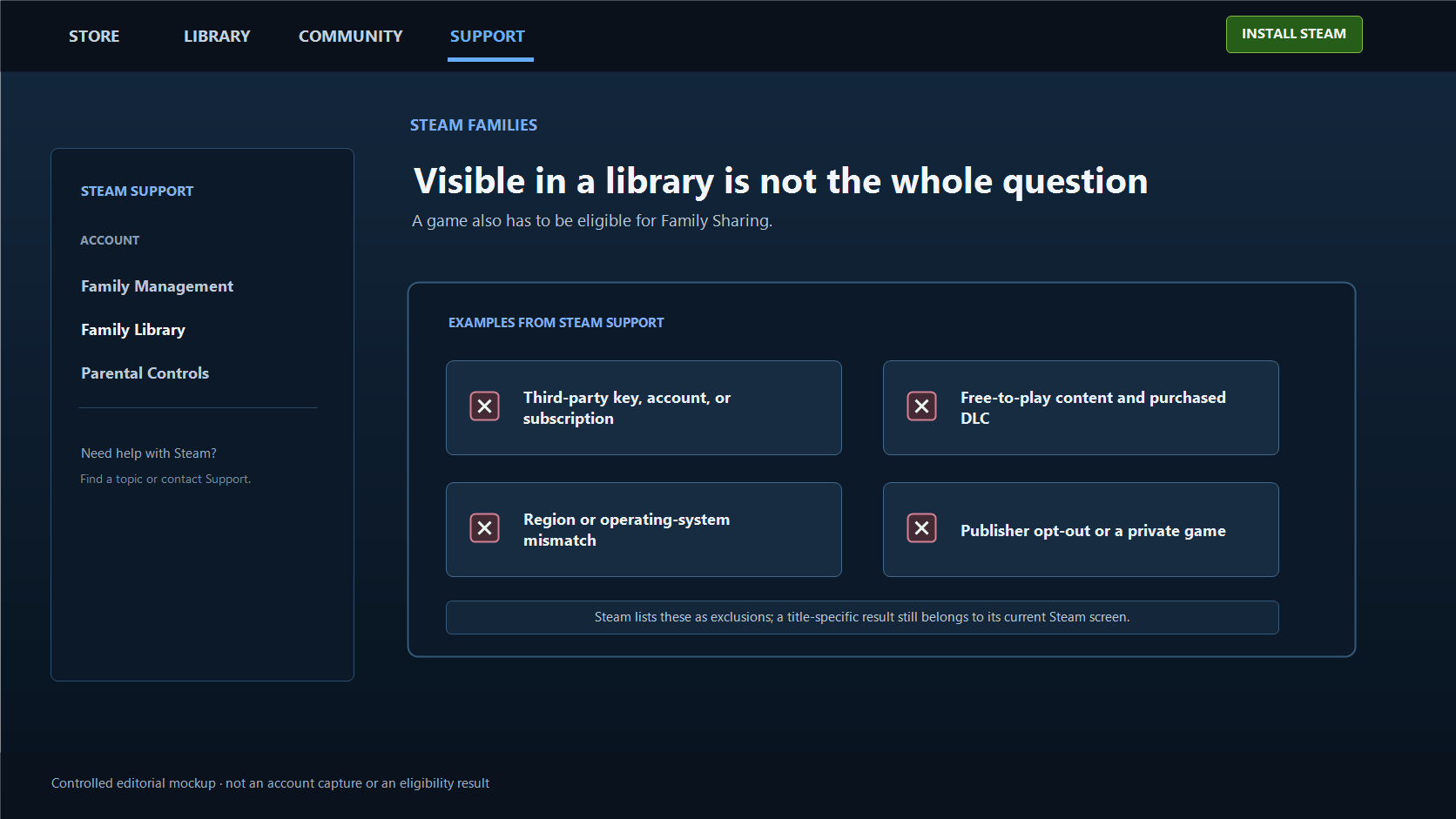
Steam's FAQ lists these sharing exclusions:
- games that require an additional third-party key, account, or subscription;
- free-to-play games and their purchased DLC;
- games or DLC restricted in a member's region;
- games that do not support another member's operating system;
- games that the publisher has excluded from sharing; and
- games marked private by the original owner.
A Family setting cannot supply a missing third-party account or subscription, fix an unsupported operating system, or remove a regional condition. A publisher can also choose to exclude a game later, so an old report that a title worked is not proof of its current status.
If the game is missing or locked, read its current guidance instead of repeatedly changing the Family. The feature does not override those game-level conditions.
The “one-year” limit has two meanings
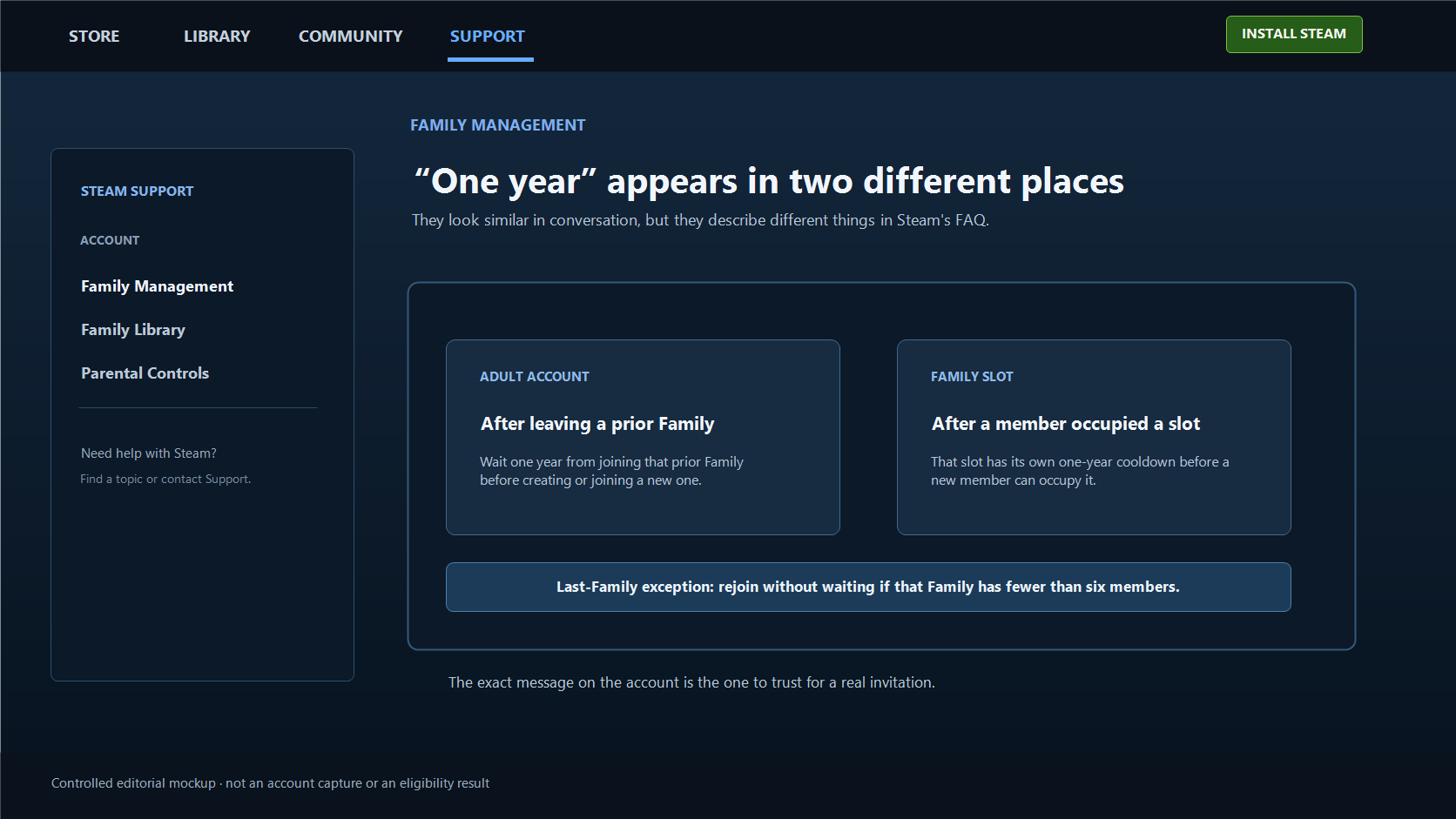
Game locks and Family-joining limits are separate issues. An adult can leave a Family, but must wait 1 year from the day they joined the previous Family before creating or joining another one. A Family member slot also has a 1-year waiting period before a new member can occupy it. An empty place does not remove the account's separate wait, and an eligible account does not remove a slot's wait.
There is a limited exception for rejoining the last Family: if that Family has fewer than 6 members when the person rejoins, Steam says the person does not have to wait. This does not apply to every move between Families. Check the remaining time shown during the join attempt rather than converting 1 year into an assumed 365-day release time.
Steam's FAQ also mentions account activity that does not show the person belongs to the same household as the existing members. It does not publish the household-checking formula, and says participation requirements may change. Guesses about changing an IP address, device, home address, or payment method are not supported by that guidance.
A child member cannot leave alone; an adult member or Steam Support must remove the child. Those conditions make changing the Family for the sake of one locked game a serious step.
A Family Library does not merge accounts
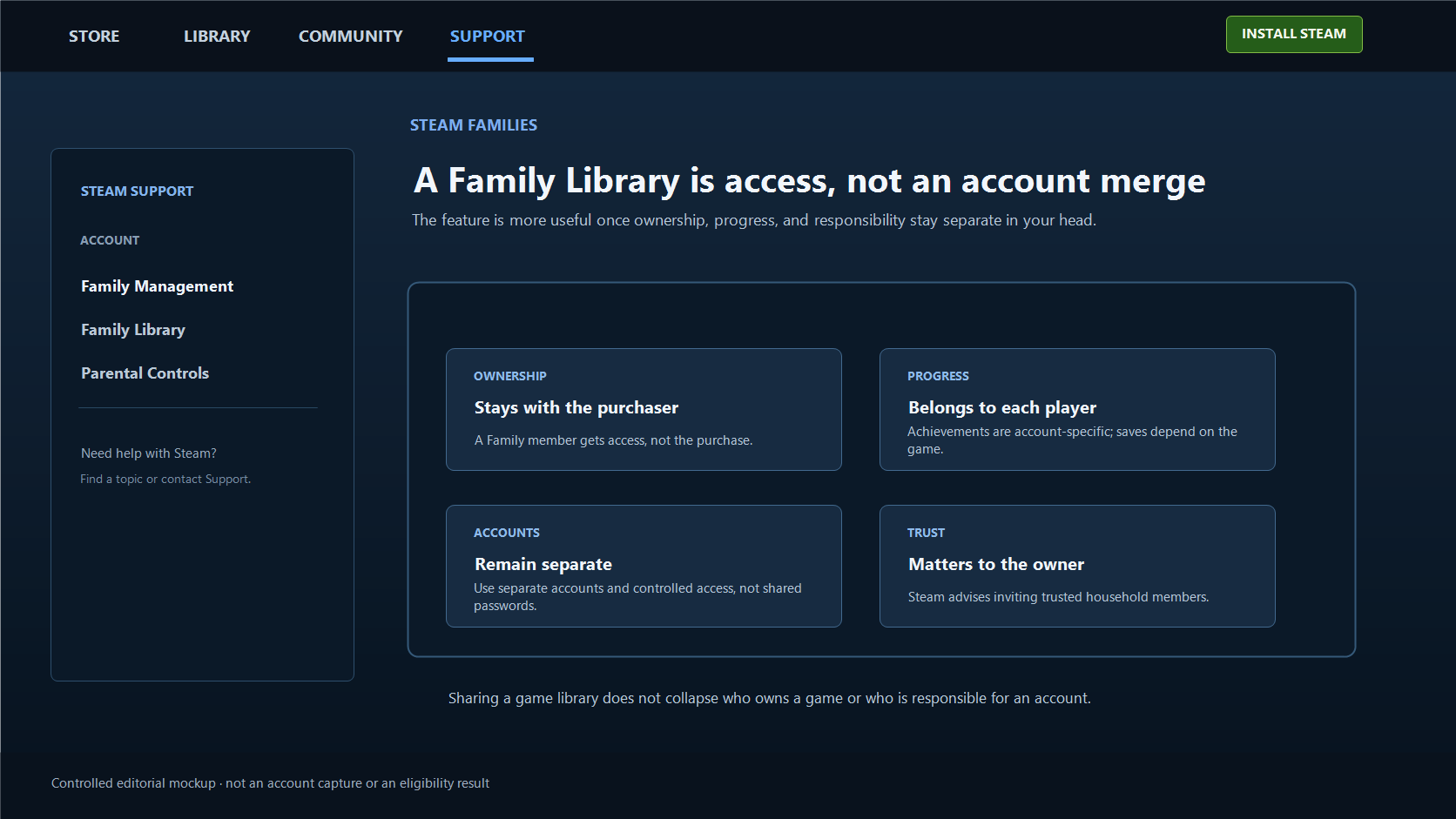
Ownership stays with the person who bought the game. When someone plays a shared game, achievements, Workshop access, and saves are handled through that player's account, while the exact save behaviour depends on the game. If progress differs on another PC, check which save to keep in a Steam Cloud conflict separately from the Family's copy count.
There is no reason to give a Family member your password or Steam Guard code. Steam also warns that if a member cheats or commits fraud while playing another member's game, Family privileges may be revoked and the owner may also receive a VAC ban. That warning is conditional; it does not mean every account is automatically banned. It is a reason to invite trusted close-household members.
Remote Play Together is a different feature: the host runs a supported game and invites others into that session. It does not change the number of Family copies or remove Family-joining limits.
Fact boundary — This article was checked against Valve's Steam Families User Guide & FAQ on September 4, 2026. The images are explanatory Steam-support-style mockups, not live account screens or play results. Sharing eligibility and participation requirements may change, and this article does not guarantee an outcome for a particular account, Family, game, DLC, save, invitation, or sanction.
Ready to sell supported Sacks of Gems?
After the bot confirms receipt, USDT is credited to your site balance. Polygon withdrawal is a separate request.